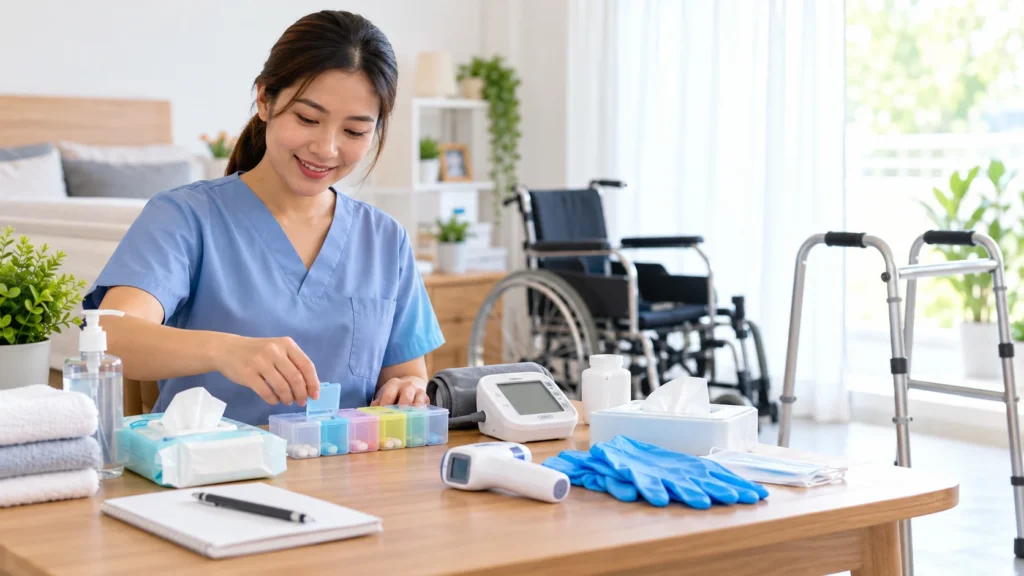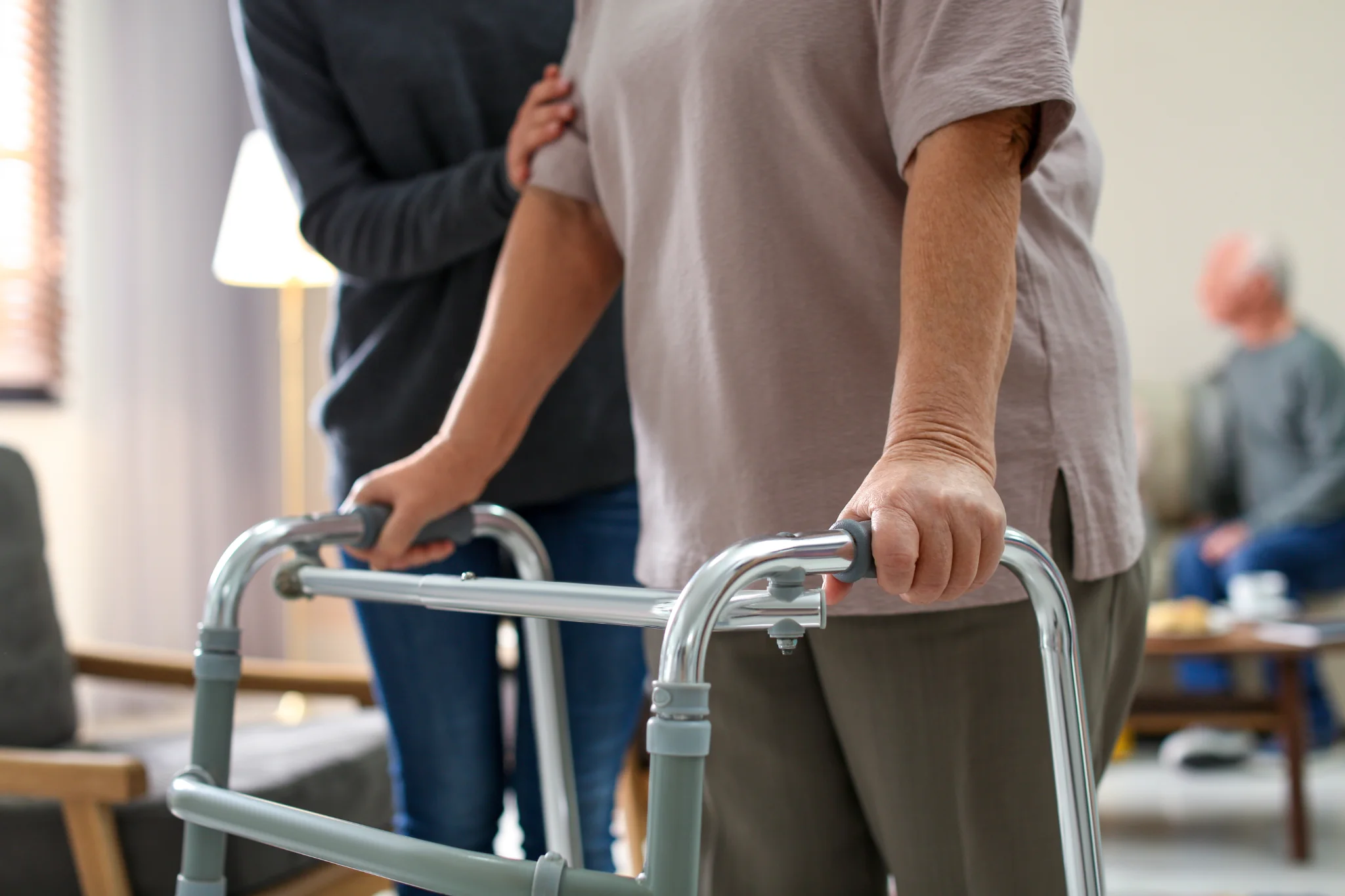
Caring for a hip fracture patient at home is something most families aren’t prepared for until they face it themselves. For elderly people, a hip fracture isn’t just a broken bone — it’s a major, life-changing event, and most of the recovery happens at home.
Treatment can take several forms — traction to align the bone, surgical fixation with plates or screws, or hip replacement — depending on the orthopedic doctor’s assessment. Whatever the treatment, recovery usually takes a long time: the bone itself takes about 6–8 weeks to unite, but regaining normal movement and independence can take 3–6 months.
Most hip fractures in the elderly result from fragile, easily broken bones due to osteoporosis. Even though surgery can fix and align the bone, the surrounding muscles, ligaments, and nerves still need time to heal and relearn their function.
1. Managing pain
Pain is a normal part of recovery, but it must be consistently well controlled. If pain is left unmanaged until the patient is afraid to move, it increases the risk of blood clots, joint stiffness, and muscle wasting. Give pain medication exactly on the schedule the doctor prescribes.
2. Preventing deep vein thrombosis (DVT)
DVT is a serious post-surgical risk, because a blood clot can travel and block vessels in the lungs, causing severe complications. It can be prevented with regular movement and ankle pumps, wearing compression stockings, and taking blood thinners as prescribed.
Warning signs to watch for: If there is leg swelling, pain or heat in the calf, or sudden chest pain with shortness of breath, seek medical care immediately.
3. Keeping the body clean without disturbing the wound
After surgery, the wound must stay dry until fully healed (about 2–4 weeks). A rinse-free body wash helps enormously here — it allows a full-body wipe-down without moving the patient excessively, and reduces the risk of water getting into the surgical wound and causing infection.
4. Movements that are strictly forbidden — always follow the doctor’s instructions, for example:
- Do not bend the hip beyond 90 degrees, such as sitting on low chairs or bending forward too far
- Do not cross the legs, including crossing the ankles
- Do not twist or turn the foot of the operated leg inward
How Protea underpads make care easier
Many patients experience temporary incontinence during recovery. A quality underpad on the bed does an excellent job of protecting the mattress from soiling. Protea underpads also have grip handles, making repositioning and turning the patient easier and safer.
Nutrition: an important factor that is often overlooked
Bone repair demands a great deal of nutrients, so maintain adequate levels every day:
- Calcium: 1,200 mg/day (for adults aged 50 and over)
- Vitamin D: 800–1,000 IU/day
- Protein: include quality protein at every meal to support muscle and tissue recovery
Hygiene care helpers
Protea Rinse-Free Body Wash, used together with Protea underpads, makes daily hygiene care for hip fracture patients easier and safer.
References
- Hip Fracture Recovery Tips for Caregivers — Best Care MN
- Safety-Promoting Interventions After Hip Fracture — ScienceDirect
- Hip Fracture in Elderly: A Comprehensive Guide — Carex
- Nutrition — International Osteoporosis Foundation
- Home vs Hospital Rehabilitation After Hip Fracture — PMC 2024