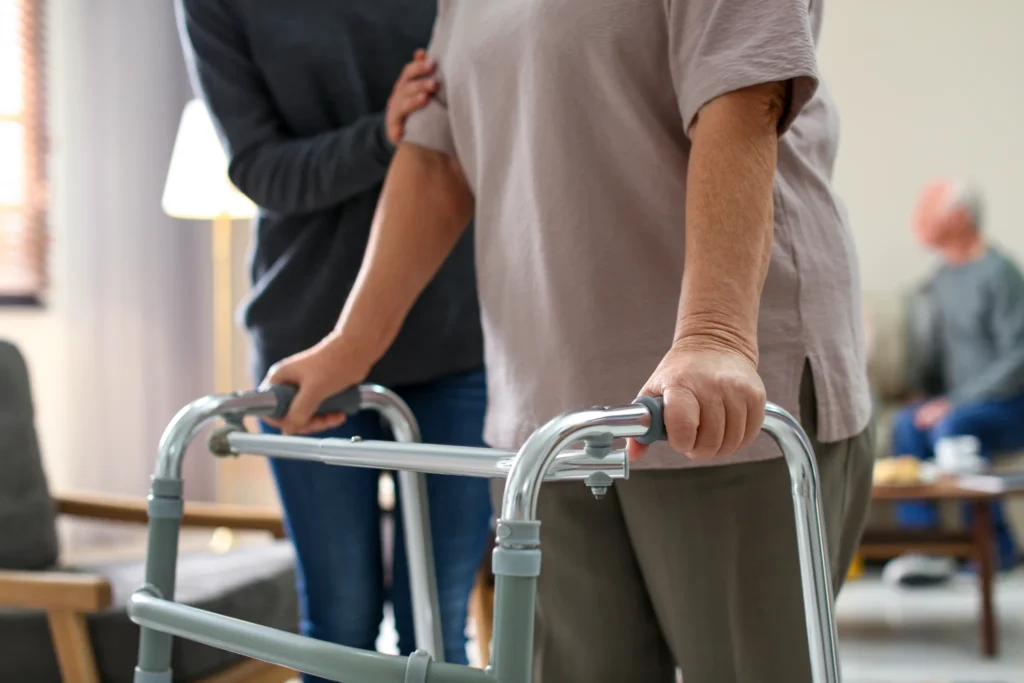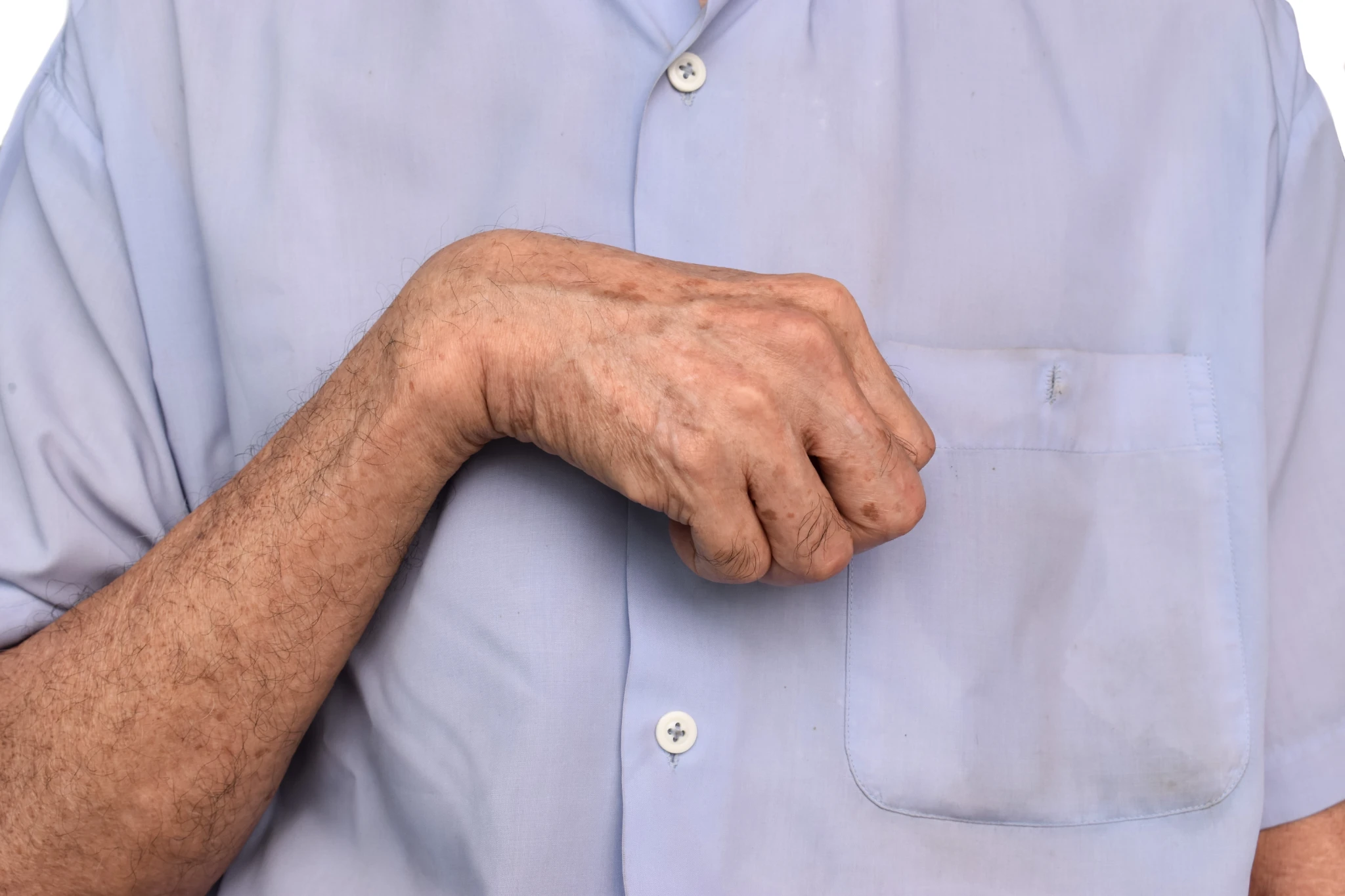
Muscle tightness and joint contracture after a stroke often take weeks to develop — yet treating them can take months. That is why prevention is the only approach that truly works and is realistically achievable.
What Is Joint Contracture?
When a limb or joint stays motionless for a long time, the tissues around the joint begin to shorten and stiffen as collagen fibers align in a disorganized way, reducing flexibility.
In stroke patients, the joints most often affected are the hand, wrist, elbow, hip, knee, and ankle.
High-Risk Groups to Watch
- Stroke patients with hemiplegia or muscle weakness
- Patients with spinal cord injuries who cannot move the lower body
- Patients bedridden for long periods from any cause
- Patients with muscle spasticity after brain injury, where constant pulling keeps the joints bent
Daily Prevention Routine: Joint Exercises
Passive range-of-motion exercises, in which the caregiver moves the joints while the patient doesn’t need to exert effort, are the heart of prevention.
How to Move the Joints Correctly
- Tell the patient before every session, so they can relax and are not startled
- Support the arms and legs securely at all times — never let a limb dangle unsupported
- Move slowly and smoothly; never jerk or yank
- Stretch each joint to the point of gentle tension and hold for 15 seconds
- Never force a joint if the patient feels pain
- Do 2 sessions a day, 10 repetitions per joint, covering all the major joints
Positions to Watch — Don’t Leave Them Unattended for Long
- Bent wrist: position it straight or tilted slightly upward
- Bent elbow: fully extend it at least once a day
- Bent hips and knees: use positioning aids so the legs alternate between straight and bent-knee positions
- Pointed, downward-flexed foot: use an ankle splint or foot-support pillow to keep the ankle at 90 degrees
Daytime Positioning and Skin Care
Positioning: Two exercise sessions a day accomplish nothing if the patient then spends the remaining 22 hours in positions that encourage contracture. Use positioning aids to keep the arms and legs correctly aligned at all times.
Skin care: Exercise sessions are also a good opportunity to inspect the skin, especially in skin folds, between the fingers, and between the toes. A rinse-free cleanser such as Protea Rinse-Free Body Wash makes it easy to wipe these hidden areas clean gently — without the patient having to hold an arm stiffly under running water for a long time.
References
- Contractures After Stroke: How to Prevent and Reverse Them — Flint Rehab
- How to Prevent Contractures in a Bedridden Patient — Peck Law Corp
- Stroke: Positioning — Physiopedia
- Everyday Personal Care — VA RESCUE Stroke Caregiving