

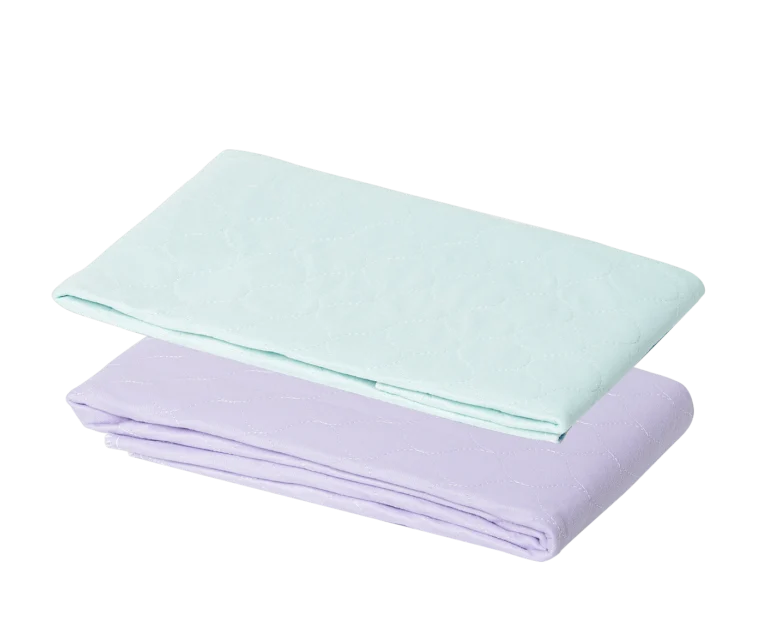
Protea Underpads
This aid makes repositioning and turning patients in bed easier, reducing the risk of pressure sores. It minimizes caregiver strain, eliminating the need for heavy lifting and preventing back pain while reducing the risk of accidents during positioning. Featuring a special 4-layer thick fabric, it is soft to the touch, comfortable to lie on, and non-irritating to the skin. It is easy to clean and can be hand-washed or machine-washed as usual.


Who is the Protea Underpad suitable for?
The elderly or bedridden patients
Helps caregivers reposition and turn patients more easily, preventing and reducing the risk of pressure sores.
Pregnant women
Helps prevent amniotic fluid from staining the bed or can be used as a multipurpose protective pad.
Infants
Prevents urine from staining the bed and can be used as a mat during diaper changes.
Available in 2 sizes
Designed to meet your specific needs

4-Handle Model
Sized to fit the patient’s torso.
Highly absorbent and easy to clean.
Facilitates easy positioning and turning, even for a single caregiver.
6-Handle Model
Suitable for tall or large-framed patients.
Full-length size prevents the patient from sliding off the pad.
Provides increased absorbency.

Instructions for Use
It is recommended to reposition and turn the patient every 2 hours. To reduce the risk of pressure sores.
- The caregiver should stand on the side toward which the patient will be turned.
- Bend the knee on the side opposite the caregiver, then use the other hand to pull the underpad handle to support the patient’s knee in place.
- Extend the patient’s arm closest to the caregiver with a slight bend at the elbow to prevent them from rolling onto it. Place the other arm across the patient’s body, then use the other hand to pull the underpad handle.
- Using both hands on the handles, apply steady force to turn the patient onto their side toward the caregiver.
- Place a pillow behind the patient’s back and slowly release the underpad so the patient rests against the pillow.
- Check and adjust the patient’s position to ensure they are lying properly without any twisting or tilting of the body.
*The Protea underpad is not recommended for lifting or transporting patients and the elderly over long distances.
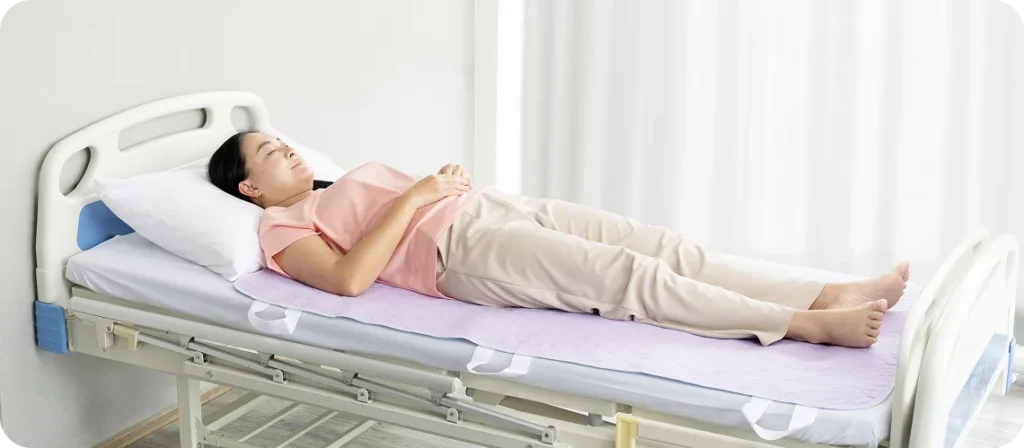

Use in conjunction with the Protea Positioning Pillow
The Protea positioning pillow supports various sleeping positions, such as providing back support for side-lying, or placement under the knees or ankles to enhance patient relaxation and reduce the risk of pressure sores at vulnerable points.
Instructional Video