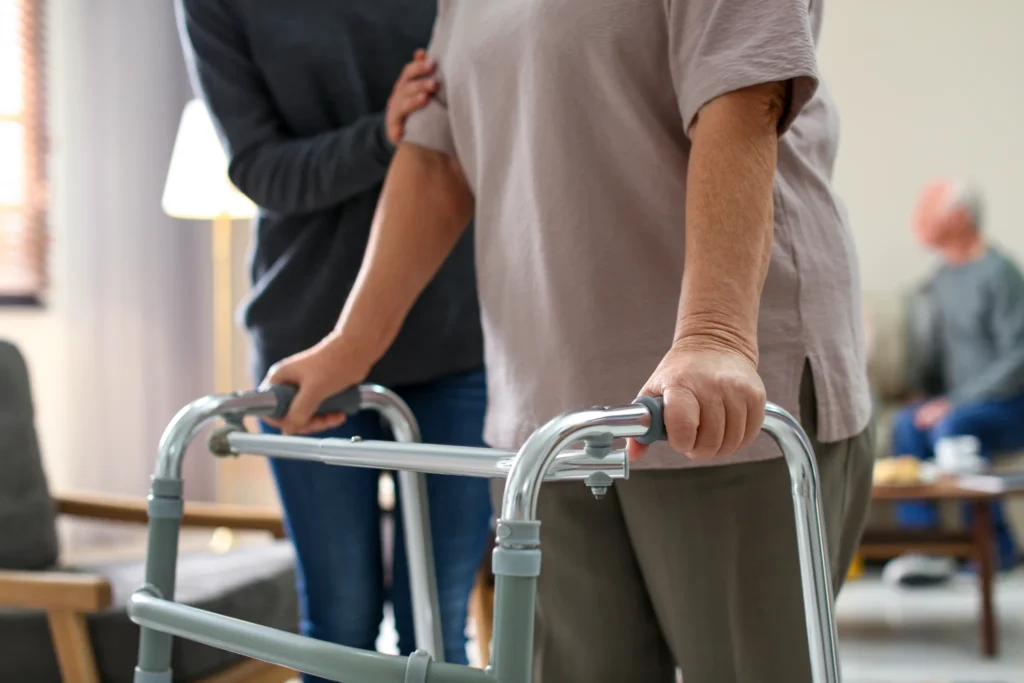
Have you noticed that your mother’s or father’s skin looks thinner and drier than before — bruising at the slightest touch, or small wounds that heal far more slowly than normal? That is no accident. It is a biological process that happens as we age. Understanding why elderly skin changes is the first step toward caring for older adults properly.
The Science of Aging Skin
As we get older, the skin goes through several changes at once:
- Collagen and elastin decrease, making the skin thinner, less elastic, and slower to recover after being touched
- Oil glands produce less sebum, so the skin naturally becomes drier
- The skin’s pH changes, increasing the risk of bacterial and fungal infection
- The stratum corneum (the outermost layer) thins, and its ability to hold in moisture declines significantly
Voegeli (2008) showed that washing with harsh soap or repeatedly rubbing the skin damages the skin’s protective barrier far more in older adults than in young people.
Why Ordinary Soap Can Harm Elderly Skin
Most bar soaps and shower gels contain SLS (Sodium Lauryl Sulfate) or SLES — detergents that strip away the skin’s natural oils. For older adults whose skin already has little oil, that means every bath leaves the skin drier and thinner than before.
Beeckman et al. (2014) confirmed in a systematic review that moisture and skin irritation are directly linked to pressure ulcer development in patients — skin already damaged by harsh soap is at even greater risk.
The Right Principles for Caring for Elderly Skin
- Use products with a neutral or skin-friendly pH (pH 5.5–6.5); avoid highly alkaline soaps
- Don’t rub: pat gently both when cleansing and when drying
- Apply moisturizer immediately after bathing, while the skin is still warm, to lock in moisture
- Choose alcohol-free products — alcohol dries and irritates the skin
- Drink enough water: caring for the skin from within matters as much as from without
When Bathing Becomes Difficult: Gentler Alternatives
Hodgkinson et al. (2020) found that rinse-free cleansing products maintain skin integrity better than traditional soap and water in older people who can do less for themselves.
Protea Rinse-Free Body Wash Concentrate is designed precisely for this need: just 3 pumps mixed with 300 ml of warm water, poured over the skin that needs cleaning, then wiped gently with a damp cloth and patted dry — no rinsing required. It has a light green tea scent and is free from SLS, SLES, parabens, and alcohol, making it suitable for all types of delicate skin.
Warning Signs to Watch For — and When to See a Doctor
- Redness that does not fade when pressed: this may be the earliest stage of a pressure ulcer
- Cracked or split skin, especially on the heels and legs
- Swollen, inflamed, or discharging skin: see a doctor immediately
- Itchy skin with rash and redness, especially between the fingers and in skin folds
Protea believes that caring for elderly skin is not about beauty — it is about preventing disease and protecting quality of life. Try switching your products today and notice the difference within the first week.
References
- Voegeli, D. (2008). The effect of washing and drying practices on skin barrier function. Journal of Wound, Ostomy and Continence Nursing, 35(1), 84–90.
- Hodgkinson, B. et al. (2020). Hygiene and emollient interventions for maintaining skin integrity in older people. Cochrane Database of Systematic Reviews. https://pmc.ncbi.nlm.nih.gov/articles/PMC6996088/
- Beeckman, D. et al. (2014). A Systematic Review and Meta-Analysis of Incontinence-Associated Dermatitis, Incontinence, and Moisture as Risk Factors for Pressure Ulcer Development. Research in Nursing & Health, 37(3), 204–218. https://onlinelibrary.wiley.com/doi/abs/10.1002/nur.21593