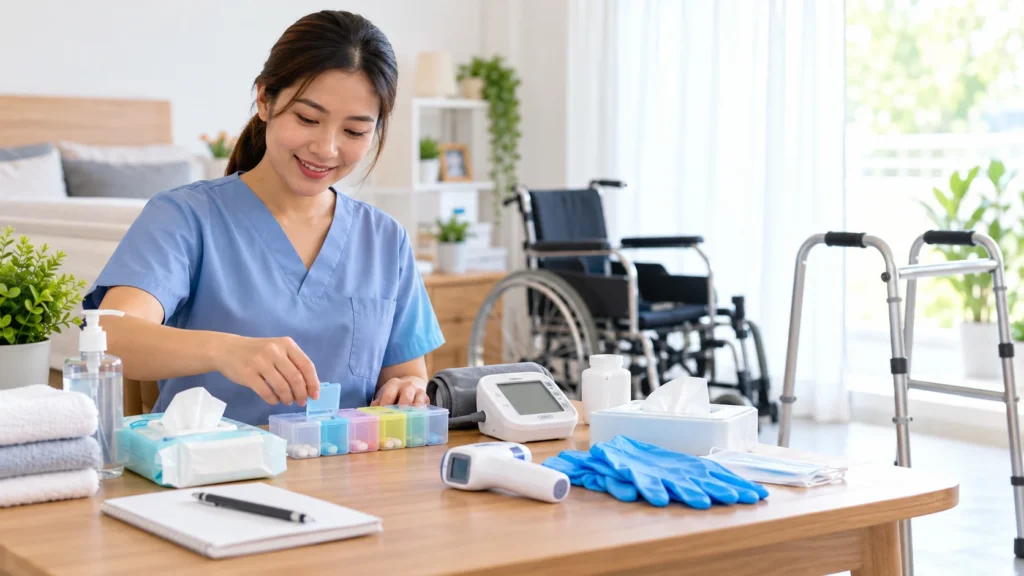
Caring for a bedridden patient is not easy — but it can be made more effective and safer with the right equipment. The right gear not only eases the caregiver’s burden but also improves the patient’s quality of life. This article introduces 4 essential pieces of equipment for caring for a bedridden patient that every household should have, for care that is more convenient, safer, and of a higher standard.
Hospital Bed
The hospital bed is the most fundamental and important piece of equipment — especially an electric bed that can adjust the angle of the head and legs. It lets the patient sit or recline comfortably, reduces the risk of pressure ulcers, and makes cleaning and moving the patient’s body easier for the caregiver. It also relieves the aches and stiffness caused by lying in the same position for long periods.
Overbed Table
An overbed table makes it easier for the patient to carry out various activities — eating meals, reading, or keeping essential items close at hand such as medication or a phone. This type of table adjusts in height and slides in and out easily, giving the patient greater independence even while confined to bed.
Bedpan or Commode Chair
For patients who cannot walk to the bathroom easily, a bedpan or commode chair is an important helper. It reduces the risk of accidents during transfers and makes toileting far more manageable — especially at night or in an emergency. It also helps preserve the patient’s hygiene and dignity.
Bed Rail / Safety Rail
Bed rails or fall-prevention devices are extremely important for patients who are confused, move about without realizing it, or are at risk of falling out of bed. This equipment increases safety, reduces accidents, and lets the caregiver watch over the patient with greater confidence — especially during times when they cannot be supervised around the clock.
A Long-Term Investment for the Bedridden Patient
Choosing the right equipment for caring for a bedridden patient is not merely a matter of convenience — it is an investment in the health and quality of life of both the patient and the caregiver. These four pieces of equipment are essential helpers that make care more effective, reduce the risk of complications, and ensure the patient receives close, attentive care every day.