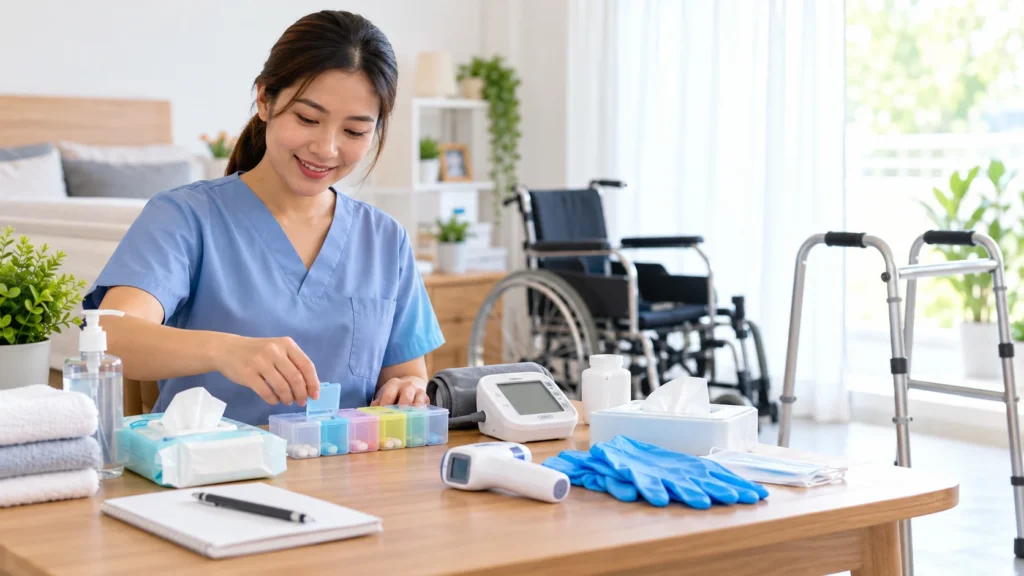
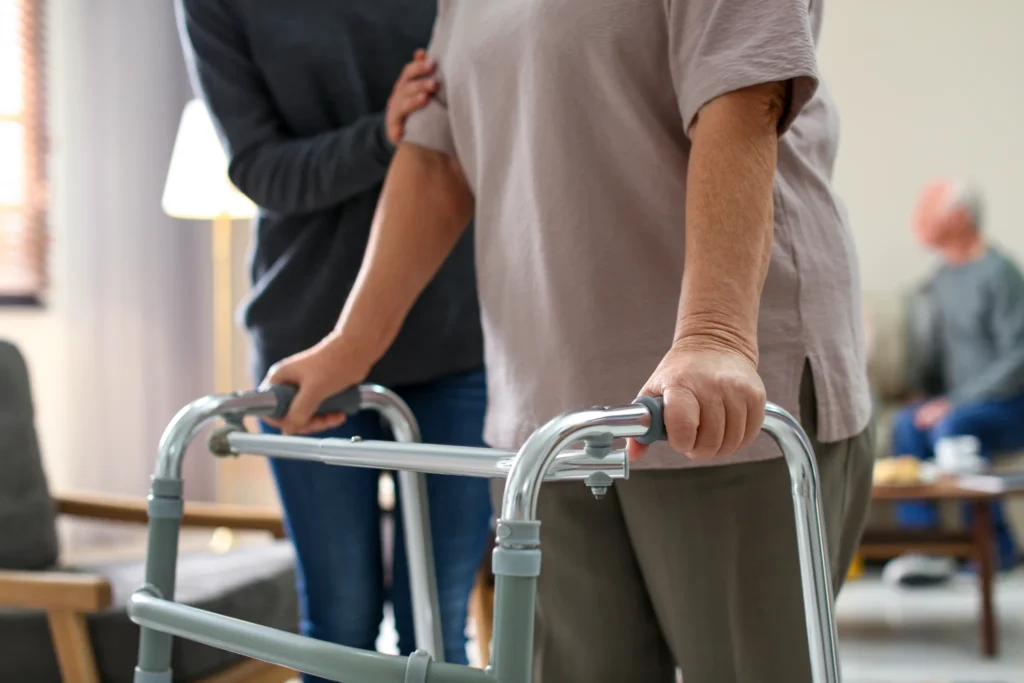
If you are caring for a bedridden patient at home, Protea wants you to know: taking care of yourself is not selfish — it is the fuel that lets you keep caring for someone else, for longer.
There was a time when many family caregivers of bedridden patients felt they had no right to be tired.
Because the person lying in the bed was more exhausted than they were.
But here is the first truth Protea would like to share: a body worn down by accumulated fatigue is not a symbol of love. It is a signal that it is time to pause and take care of yourself for a while.
1. Start by learning to sleep well — not just getting to sleep at all
Many caregivers of bedridden patients sleep in “alert mode” all night long. That is why even 6–7 hours of sleep can still leave them feeling unrested.
Try using a positioning pillow to help hold the patient comfortably in the correct side-lying position throughout the night. This reduces the chance of the patient becoming uncomfortable and waking you in the middle of the night — giving you longer, uninterrupted stretches of sleep without the constant worry.
2. Just 20 minutes a day for yourself is enough
You don’t need a spa day or hours to yourself. Just 20 minutes doing something that has nothing to do with caring for anyone — reading a book, brewing tea, listening to music, or simply sitting quietly.
Research from the Journal of Gerontology found that caregivers who had “guaranteed personal time” had cortisol levels (the stress hormone) up to 27% lower than those who did not.
3. Talk to someone — don’t carry everything alone
One of the things that burns out home caregivers fastest is the feeling of fighting alone. Try joining an online community for family caregivers. There are several Thai-language groups where people talk with real understanding. Sometimes just knowing that someone understands helps more than any advice could.
4. Invest in labor-saving equipment — not for convenience, but for your health
Caregivers who lift, turn, and transfer a bedridden patient using raw physical strength alone face up to a 3 times higher risk of back injury compared with those who use assistive equipment. Protea’s underpad with grab handles helps you slide and turn the patient with far less effort than usual — and it is washable and reusable, so there is no daily expense for disposables.
Protea believes that people caring for bedridden patients at home are among the hardest-working people in the world — no days off, no bonuses, and rarely anyone asking, “How are you today?”
So we are asking: how are you today?
And if you need a little helper to make each day a bit lighter, Protea is right here.
References
- Pinquart, M. & Sörensen, S. (2003). Associations of stressors and uplifts of caregiving with caregiver burden. Journal of Gerontology, 58B(2), 112–128.
- Holt-Lunstad, J. et al. (2015). Loneliness and social isolation as risk factors for mortality. Perspectives on Psychological Science, 10(2), 227–237.
- Department of Mental Health, Ministry of Public Health (Thailand). (2022). Self-care manual for caregivers of older adults.