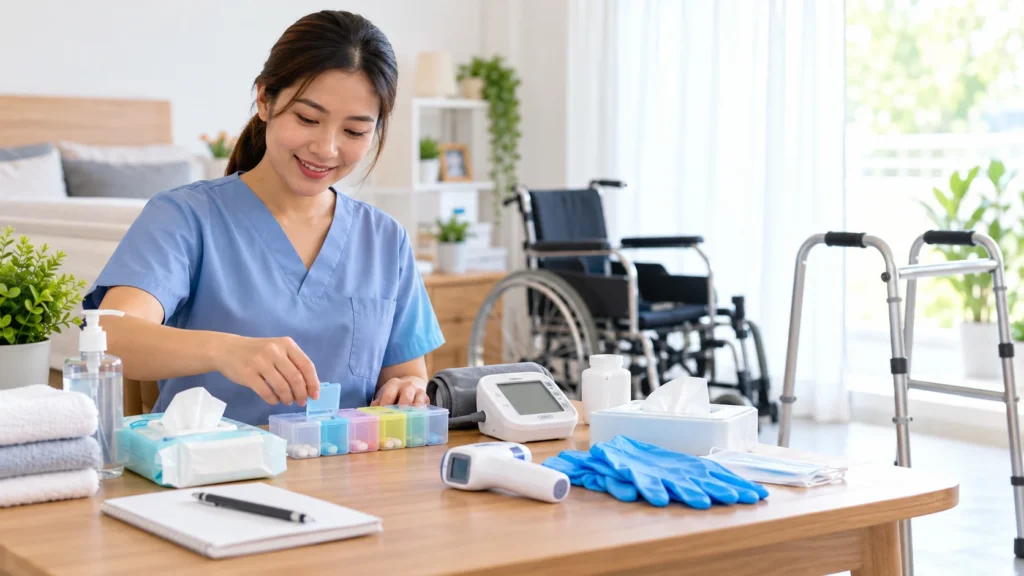
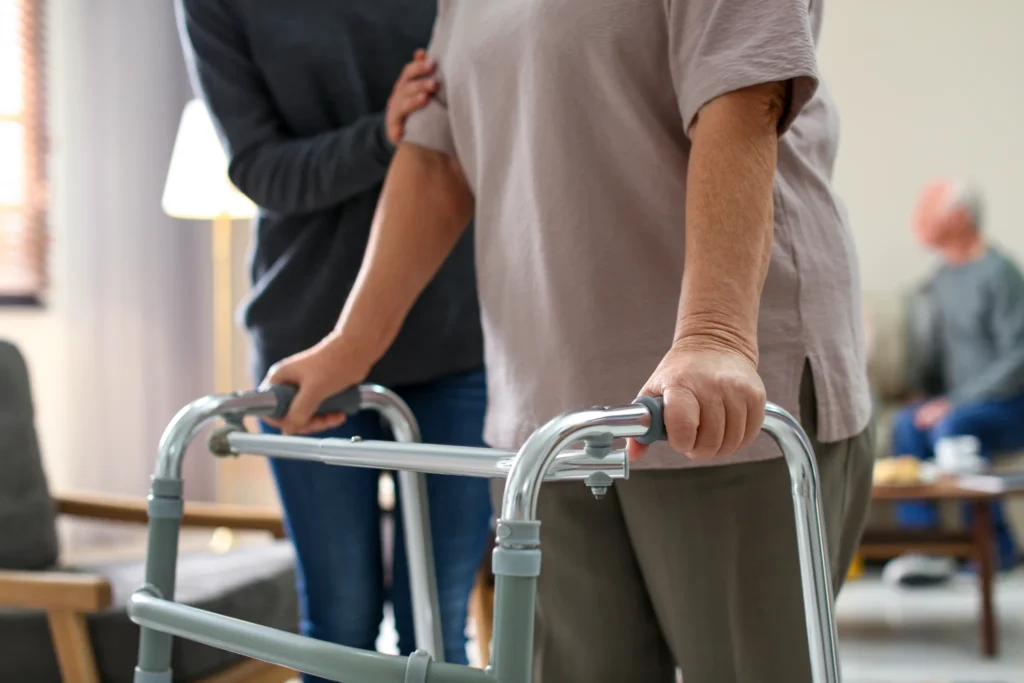
If you are caring for a patient at home, one of the daily tasks that feels riskiest is lifting a bedridden patient — whether to change the sheets, clean them, bathe them, or move them to sit in a chair. Protea wants you to know there are ways to make this safer for both the patient and you.
What should you prepare before lifting?
Most mistakes in lifting a bedridden patient come from rushing and failing to prepare the space first. Protea recommends clearing the area around the bed so it is free of obstacles, locking the bed’s wheels if it has any, and telling the patient in advance every time what you are about to do — so the patient can help with whatever strength they have.
The correct posture for the caregiver
The golden rule of lifting a bedridden patient is “lift with your legs, not your back.” Bend your knees while keeping your back straight, place your feet about shoulder-width apart, then rise slowly — never stooping or rounding your back. This technique reduces the load on the spine by more than 50% compared with lifting in a bent-over posture.
For those caring for a patient on their own, we recommend practicing the correct lifting technique with a physical therapist at least once, to make sure you are doing it right before doing it yourself at home.
Recovery-care helpers that make lifting easier
Having the right patient-care helpers can transform the experience of lifting a patient. Protea recommends:
Underpad with 6 grab handles (86×150 cm)
The underpad with grab handles supports the patient along the full length of the body and helps you slide them across the bed without excessive effort. It does a great job of easing the workload for caregivers of bedridden patients — and it can also be kept clean and washed for reuse.
Positioning pillow
A positioning pillow placed behind the back or under the legs after lifting keeps the patient in the correct position without constant propping, reducing the chance of pressure ulcers. It comfortably supports every body type, uses memory foam that springs back quickly, and helps prevent sliding very well.
Bed rail
A bedside rail gives the patient something to hold onto so they can help support themselves — significantly lightening the caregiver’s load.
When one person is not enough to care for a bedridden patient effectively
For heavier patients, or those who can barely help move themselves, Protea recommends asking another family member for help, or consulting a physical therapy specialist about specialized lifting equipment — because the caregiver’s health matters just as much as the patient’s.
References
- American Physical Therapy Association. (2022). Safe Patient Handling and Mobility: Guidelines for Physical Therapists.
- Marras, W.S. et al. (1999). Spine loading during patient transfers. Spine, 24(16), 1673–1683.
- Nursing Division, Ministry of Public Health (Thailand). (2020). Guidelines for the safe transfer of patients.