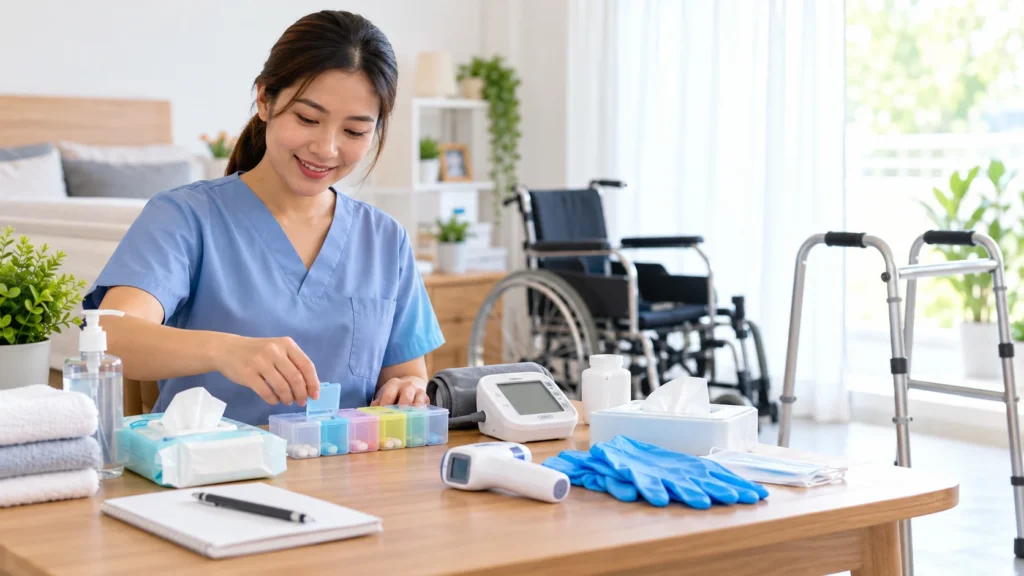
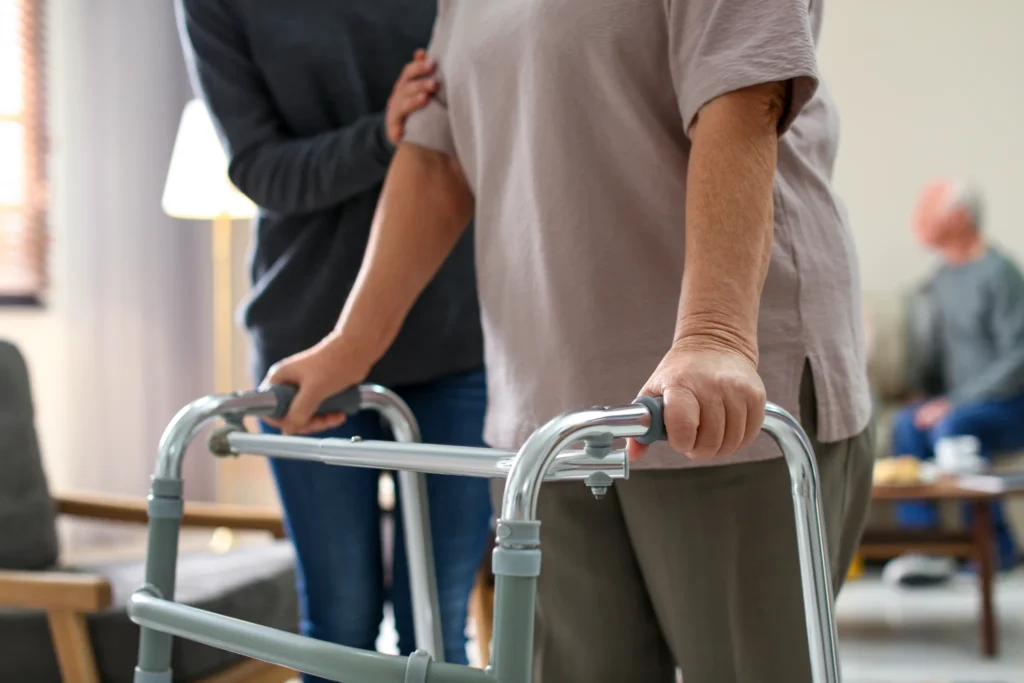
Stroke — whether ischemic (blocked vessel) or hemorrhagic (bleeding in the brain) — often leaves one major mark of disability: hemiparesis, weakness on one side of the body. When the patient enters the recovery phase and is allowed to return home, the family’s role changes instantly from “visitor” to “primary care team.” Proper care during the first 3–6 months is the key that determines whether the patient will walk again or remain bedridden.
Physical Rehabilitation
The brain can rebuild new neural pathways (neuroplasticity), but it needs the right stimulation.
Positioning and Preventing Joint Contractures
In patients with hemiparesis, the arm tends to pull inward toward the body and the leg tends to fall outward. Caregivers should use positioning pillows to keep the shoulder slightly abducted, and support the ankle at a right angle to prevent foot drop.
Passive and Active Physical Therapy
For parts the patient cannot move at all, the caregiver must gently move the joints (passive range of motion) at least twice a day, 10–15 repetitions per session, to prevent adhesions. For parts that can move a little, encourage the patient to “try to do it themselves” (active) as much as possible — even if it is slow or shaky.
Hygiene Care and Preventing Complications
The most frightening problem is not the original disease, but the complications of being bedridden:
- Pressure injuries (bedsores): Turn the patient every 2 hours and watch the skin over bony prominences such as the tailbone, heels, and shoulder blades. A red mark that does not fade within 30 minutes means the risk has begun.
- Aspiration pneumonia: Patients with hemiparesis usually have weakened swallowing muscles too. Adjust food thickness according to the doctor’s advice, have the patient sit upright while eating, and do not let them lie down for at least 30–60 minutes after meals.
- Urinary tract infections: Keep the genitals clean and encourage drinking clean water (unless there is a heart or kidney restriction) to flush the urinary tract.
Environment and Psychology
The home should be adapted to reduce the risk of falls: non-slip floors, no loose doormats, and grab bars at key points. Most important of all is post-stroke depression — patients feel worthless and become easily irritated. Caregivers should praise even small achievements, such as swallowing water without choking or moving the fingers slightly, to build motivation for rehabilitation.
Summary Table: Daily Practice Guide for Caregivers
| Care area | Key practices | Goal |
| Movement | Turn every 2 hours / joint exercises 2–3 times a day | Prevent pressure injuries and joint stiffness |
| Eating | Sit upright at 90 degrees / soft, easy-to-digest food / small bites | Prevent choking and constipation |
| Elimination | Wipe and clean front to back / change diapers immediately | Prevent infection and skin inflammation |
| Safety | Install grab bars in the bathroom / good lighting / floors always dry | Prevent slips and falls |
| Medication | Take blood pressure, diabetes, and blood-thinning medication on time | Prevent recurrent stroke |
Warning Signs That Require Immediate Medical Attention (FAST)
If the patient shows a drooping face (Face), increasingly weak arms or legs (Arm), or slurred speech or confusion (Speech), take them to hospital within 4.5 hours (Time) — this may mean a new brain injury.
Caring for a stroke patient at home demands great patience and emotional strength. Good assistive products can greatly ease the caregiver’s burden. Let Protea be part of caring for the ones you love.