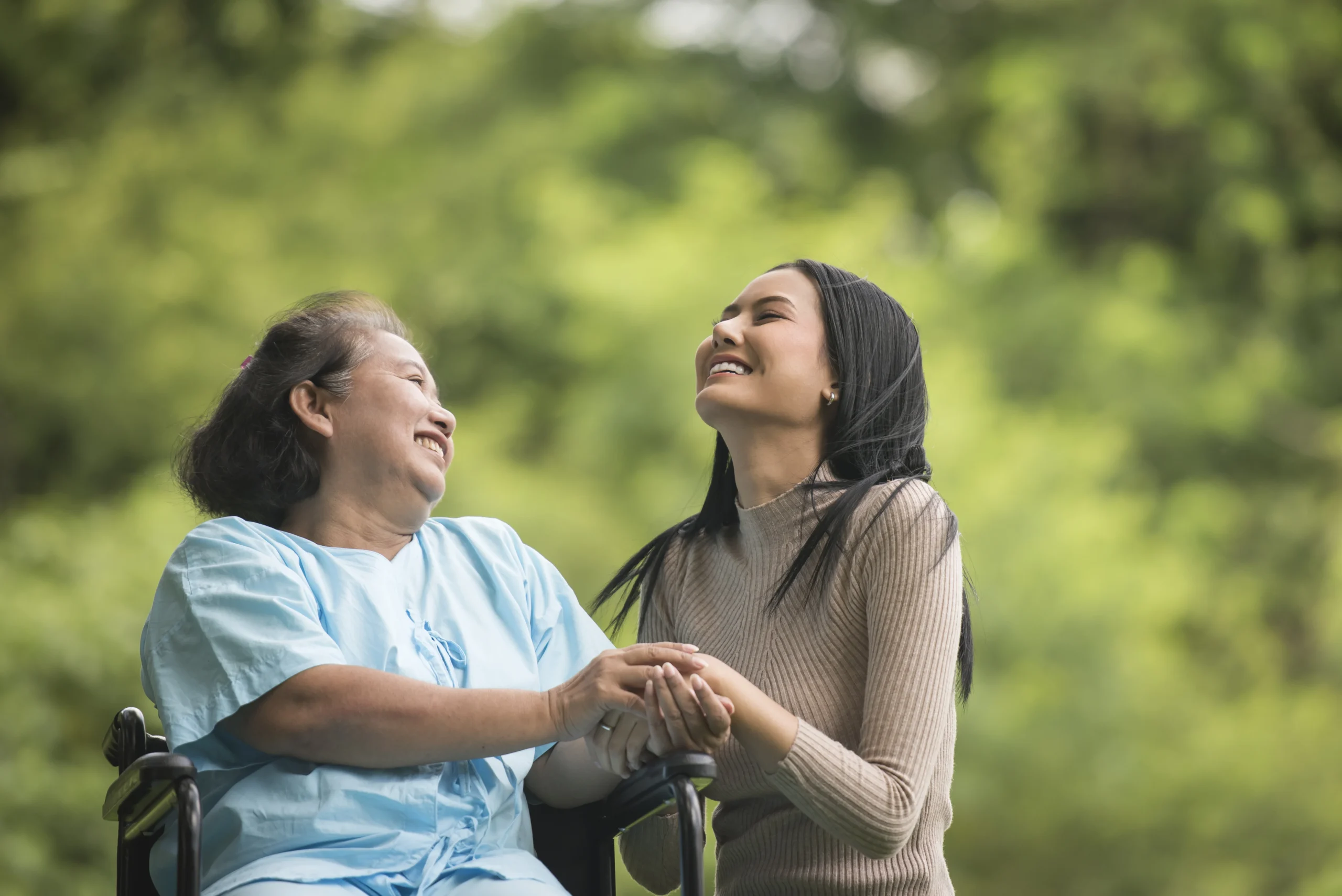
Do you remember the last time you sat quietly sipping coffee alone? Or the last time you slept a full night without anything to worry about?
For many who serve as “elderly caregivers,” these questions may sound like distant dreams.
Caring for someone you love when they need you most is a role filled with love, sacrifice, and deep connection. But we cannot deny that it comes with exhausting physical and emotional strain. So often we pour all our time and energy into caregiving and forget that someone else needs care just as much… “ourselves.”
This article is not written to say you aren’t doing enough. It is written as a friend who understands, wanting to remind you that caring for yourself is not selfish — it is necessary, so you have the strength to be there for the people you love sustainably.
The Truth We Must Accept: When “Love” Comes with “Pressure”
Before we get to self-care techniques, we’d like you to explore and accept the feelings that really arise. It is completely normal to feel:
- Physically exhausted: from lifting, assisting, cleaning, feeding, or waking up in the middle of the night.
- Emotionally drained: worrying about illness, grieving as your loved one grows weaker, or feeling guilty when you sometimes snap at them.
- Financial pressure: medical bills, helper wages (if any), and rising equipment costs against income that may be shrinking because you have less time to work.
- Family conflict: siblings who don’t understand, don’t help, or disagree about how to care — another invisible weight.
- Burnout: Thailand’s Department of Mental Health points out that caregivers are at high risk of burnout, which directly affects both physical and mental health.
Acknowledging that these feelings are real is the most important first step in starting to care for yourself.
Caregiver Self-Care Techniques (That Actually Work)
Self-care doesn’t have to mean a long vacation or spending a lot of money. It means “recharging” yourself through small things, each day.
1. Find “Gaps” Where You Can Breathe
- Micro-breaks: Don’t wait until you’re too exhausted to continue. Take 10–15 minutes while your loved one sleeps or watches TV to do something that is truly yours — step outside for fresh air, listen to 2–3 favorite songs, or simply close your eyes for easy meditation.
- Schedule your own “day off”: Talk with siblings or relatives about swapping caregiving duty for half a day or one day a week, so you can run errands, see friends, or simply rest fully.
2. Your Body Comes First
- Sleep enough: It may sound hard, but quality sleep is the most important thing. If your loved one wakes often at night, try to fit in a short nap during the day.
- Don’t skip meals: Prepare simple, nutritious food to eat. Don’t let yourself run on empty — when the body is weak, the mind weakens too.
- Move a little: You don’t need a gym. Gentle stretching during the day, or a 15–20 minute walk around the house, reduces stress and improves circulation.
3. Embrace and Manage Your Emotions
- Allow yourself to feel: It is okay to feel angry, sad, or discouraged. Don’t force yourself to be strong all the time. Recognizing and accepting your emotions is itself a form of healing.
- Find someone to listen: Venting to a close friend, your partner, or a trusted relative can lighten the load remarkably.
- Join a support group: There are many online communities for elderly caregivers today. Talking with people facing similar situations reminds you that you are not fighting alone.
4. Don’t Carry It All Alone
Asking for help is not a sign of weakness — it is courage and responsibility toward yourself and the ones you love.
- Hold a family meeting: Talk openly with siblings about the current situation and divide responsibilities clearly — expenses, rotating caregiving shifts, or helping make important decisions.
- Look for respite care: In many areas there are short-term elderly care services so primary caregivers can rest. Letting a professional share the burden for a while can reduce stress enormously.
- Consult a professional: If stress starts affecting your daily life, talking to a psychologist or psychiatrist is nothing to be ashamed of — it is finding the right tools to manage the problem.
You Are the Most Important Person in This Equation
Like the safety instructions on an airplane: “put on your own oxygen mask first, then help others.” Caring for the elderly is the same — you cannot pour from an empty cup.
Caring for yourself well is a guarantee that you will have the physical and emotional strength to keep giving the best love and care to the person you love, for a long time to come.
Try picking just one technique from this article to use today. You don’t have to do everything at once — starting with something small you can actually manage is already a great victory for a “hero” like you.
Protea sends encouragement to every elderly caregiver, and we promise to keep developing high-quality products for the wellbeing of both elderly people and their caregivers.
References:
- Department of Mental Health, Ministry of Public Health (Thailand): information on burnout and mental health guidance for the public, including caregivers — www.dmh.go.th
- Foundation Thai Gerontology Research and Development Institute (TGRI): research and articles on the situation of elderly people and caregivers in Thailand — www.thaitgri.org
- Faculty of Medicine Ramathibodi Hospital, Mahidol University: trusted, easy-to-understand health articles on elderly care and mental health — www.rama.mahidol.ac.th